Nullam dignissim, ante scelerisque the is euismod fermentum odio sem semper the is erat, a feugiat leo urna eget eros. Duis Aenean a imperdiet risus.

2
5 , May

2026 Global Medical IVD Consumables Exhibition Overview

The booming global in vitro diagnostics (IVD) industry has raised higher standards for high-precision, cleanroom-grade and compliance-based production of IVD disposable consumables. In 2026, professional global exhibitions will fully focus on IVD core consumable precision molds, micro-nano injection molding, clean manufacturing and biocompatible medical materials, becoming core platforms for mold and injection molding enterprises to grasp market trends, upgrade technologies and expand domestic and overseas customers. Core 2026 Global Professional IVD-focused Exhibitions CACLP | Mar 21–23, Xiamen, China The world’s top IVD full-industry-chain exhibition, focusing on IVD dedicated multi-cavity precision molds, injection-molded consumables (pipette tips, 96-well plates, reaction cuvettes) and medical raw materials, ideal for connecting domestic end IVD manufacturers. MedtecLIVE Stuttgart | May 05–07, Stuttgart, Germany Europe’s core medical precision manufacturing event, focusing on ultra-precision molds for microfluidic chips and thin-wall IVD consumable micro-injection molding, supporting EU market expansion and compliance adaptation. ADLM | Jul 26–30, Anaheim, USA Global top clinical diagnostics expo, featuring FDA-compliant IVD injection molding processes, durable dedicated molds and standardized lab consumables for North American business layout. Medtec China | Sep 01–03, Shanghai, China Leading domestic medical manufacturing exhibition, showcasing IVD micro-precision molds, cleanroom injection molding equipment and automated integrated production lines for compliant mass production and yield optimization. Core Industry Development Trends 1. Intelligent & Automated Production: Intelligent customized injection machines and unmanned production lines become mainstream, meeting strict requirements for batch consistency and high-efficiency mass production of IVD consumables. 2. Micro & High-precision Mold Upgrading: Miniaturized, thin-wall and microfluidic IVD products drive the iteration of micro-nano high-precision, corrosion-resistant and long-life dedicated molds. 3. Green & Compliance Manufacturing: Biocompatible and eco-friendly medical materials and low-pollution clean molding processes have become the essential threshold for global high-end order cooperation. Industry Key Takeaways IVD mold and injection molding enterprises need to focus on precision mold R&D and injection process optimization, adapt to miniaturization and compliance trends, and provide one-stop customized solutions to seize global high-quality IVD market opportunities in 2026.
抛光
5 , May

Injection Mold Mirror Polishing Process

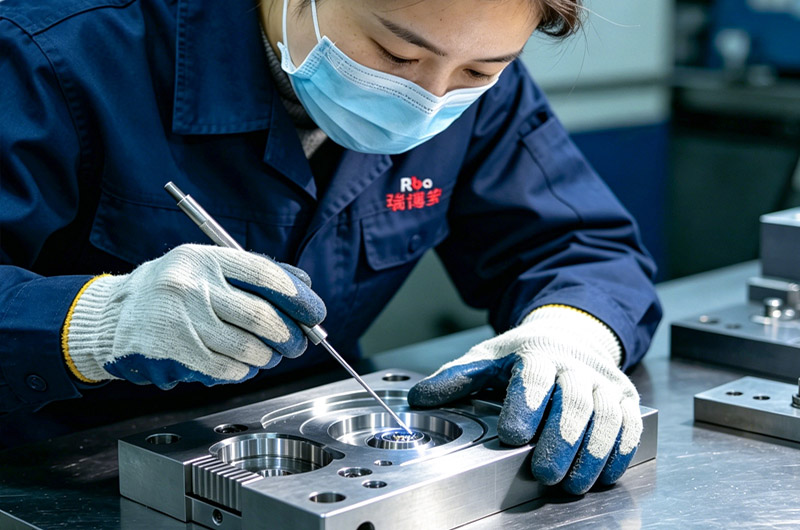
Mirror polishing of injection mold refers to a process of progressive grinding and polishing to achieve a mirror finish on the mold cavity surface. It enables molded parts to feature a smooth appearance, easy demolding and extended service life. 1. Purposes and Functions Improve the appearance quality of injection molded parts: Mirror molds can directly produce transparent or high-gloss parts in one molding step without subsequent surface finishing. Reduce demolding resistance: The ultra-smooth surface lowers friction and adhesion between plastic parts and the mold. Prolong mold service life: Minimize material residue and surface wear of the mold. 2. Process Flow Rough Grinding Adopt coarse sandpaper (240~400 grit) or silicon carbide grinding wheels to remove deep machining scratches and weld marks. Medium Grinding Gradually use 600~800 grit sandpaper to flatten most surface grooves and eliminate transitional grinding traces. Fine Grinding Apply 1000~1500 grit sandpaper to further refine surface texture and prepare for formal polishing. Primary Polishing Use felt polishing wheels with polishing compound for uniform polishing at medium and low speed. Mirror Finishing Polishing Switch to wool or cotton polishing wheels with ultra-fine polishing paste, perform final polishing under low speed and high pressure until the surface presents perfect mirror reflection. 3. Polishing Tools & Consumables Sandpaper / Abrasive cloth: 240, 400, 600, 800, 1000, 1500 grit Grinding wheels / Abrasive bits: Corundum grinding wheels, diamond grinding bits Polishing wheels: Felt wheel, leather wheel, wool wheel, cotton wheel Polishing compounds: Coarse, medium and fine grade alumina, chromium oxide and cerium oxide polishing paste Power tools: Angle grinder, polishing machine, portable micro polishing pen Auxiliary equipment: Ultrasonic cleaner, protective gloves, face mask, safety goggles
包胶
5 , May

What details should be paid attention to during TPE overmolding?

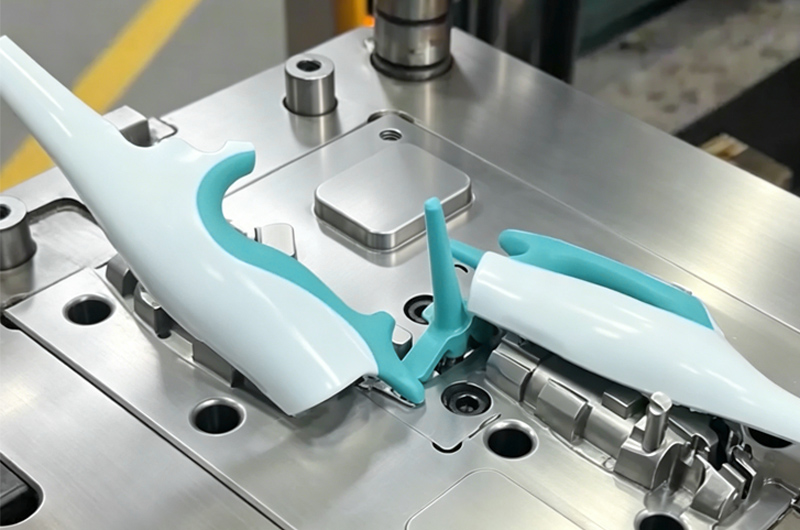
TPE overmolding is a widely adopted injection molding process, which bonds thermoplastic elastomer (TPE) directly with substrate materials such as plastics, metals and other composite materials through injection molding. 1. Material Selection and Compatibility Material Matching Different types of TPE vary from substrates (e.g., PP, PC, ABS) in chemical composition and physical properties. Therefore, it is necessary to confirm the compatibility between materials in advance, including the matching of polarity, melt flow index and coefficient of thermal expansion. Surfactants or modifiers can be applied when necessary to improve the bonding effect. Pretreatment and Surface Activation Substrate surfaces can be treated by sandblasting, plasma treatment or chemical cleaning to increase surface roughness or activate the surface layer, so as to enhance the mechanical interlocking and chemical bonding between TPE and the substrate. 2. Mold Design and Process Parameters Mold Design Considerations Runner and Gate Design: A well-designed runner system and gate position ensure uniform mold filling of TPE and reduce stress concentration. Overmolding Area Design: For the overmolding zone, the interface position between the substrate and TPE shall be taken into account. Excessive draft angle or sharp bends should be avoided to ensure uniform material flow. Cooling Channel Design: Uniform cooling is critical to minimize warpage and maintain bonding quality. The mold temperature control system shall be equipped with a reasonable layout of cooling channels. Injection Molding Process Parameters Injection Temperature: Keep the melting temperature of TPE within a proper range. Too low a temperature will lead to poor fluidity, while excessive temperature will cause material degradation. Meanwhile, the heat resistance of the substrate shall be considered to prevent structural damage under high temperature. Injection Speed and Pressure: Appropriate injection speed enables TPE to flow fully and form a qualified overmolding layer. However, excessively high speed or pressure may cause premature material cooling and internal residual stress. Holding Pressure Time and Cooling Time: Proper holding pressure ensures TPE fully fills mold details during overmolding. Sufficient cooling time allows complete material solidification and guarantees the final bonding performance. 3. Bonding Interface and Process Stability Interface Bonding Attention shall be paid to the interface structure between TPE and the substrate. Ideal mechanical interlocking and chemical bonding can be achieved through optimized mold design and process parameter setting. Defects such as insufficient filling, pores and inclusions on the interface shall be avoided as much as possible, otherwise they may cause delamination in subsequent service.
电
5 , May

Advantages of EDM Mold Machining

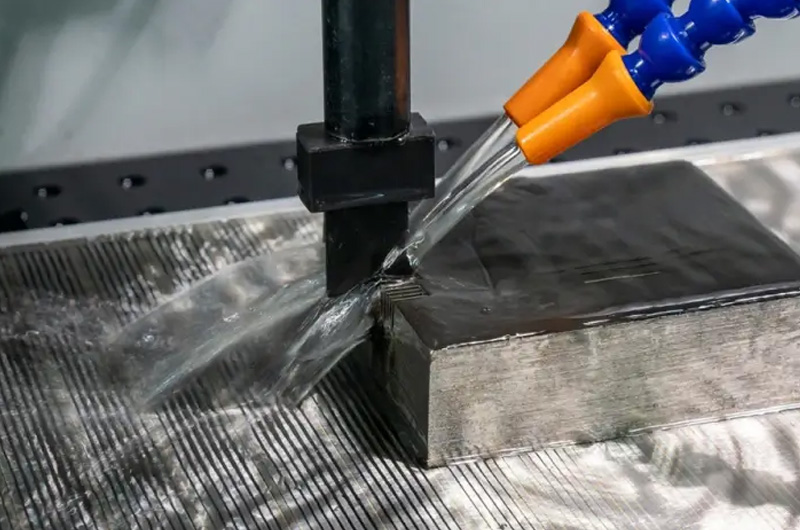
The advantages of Electrical Discharge Machining (EDM) in plastic mold manufacturing are mainly reflected in machining complex shapes, adaptability to high-hardness materials, high precision and superior surface quality, as well as stable machining performance. 1. Machining of Complex Shapes EDM can fabricate complex geometries, deep cavities, narrow slots and sharp corners that are difficult to achieve with conventional cutting tools. This is particularly critical for intricate and sophisticated structures commonly seen in plastic molds. 2. Low Requirement on Material Hardness EDM removes material via electrical spark erosion instead of mechanical cutting. Therefore, it can easily machine heat-treated high-hardness steel, making it ideal for precision processing of hardened molds. 3. High Machining Precision and Excellent Surface Quality Precision EDM achieves micron-level dimensional accuracy, with surface roughness reaching below Ra 0.2μm. It is suitable for mold cavities, engraved characters, textures and other areas demanding high precision and superior surface finish. 4. No Cutting Force and Stable Machining Since EDM involves no direct mechanical contact, there is no cutting force or vibration. This benefits the processing of thin-wall, slender and hard-to-clamp parts, effectively avoiding deformation. 5. Machinable for All Conductive Materials EDM works on any electrically conductive material, such as mold steel, copper, tungsten steel and more. Featuring wide applicability, it has become an irreplaceable key process in plastic mold manufacturing. 6. High Degree of Automation EDM equipment is generally equipped with CNC control systems, enabling automated operation and high repeatability. It is especially suitable for batch mold processing and standardized production of complex mold components.
The-Marvel-of-Modern-Product-Assembly-Crafting-Excellence
28 , February

The Marvel of Modern Product Assembly: Crafting Excellence

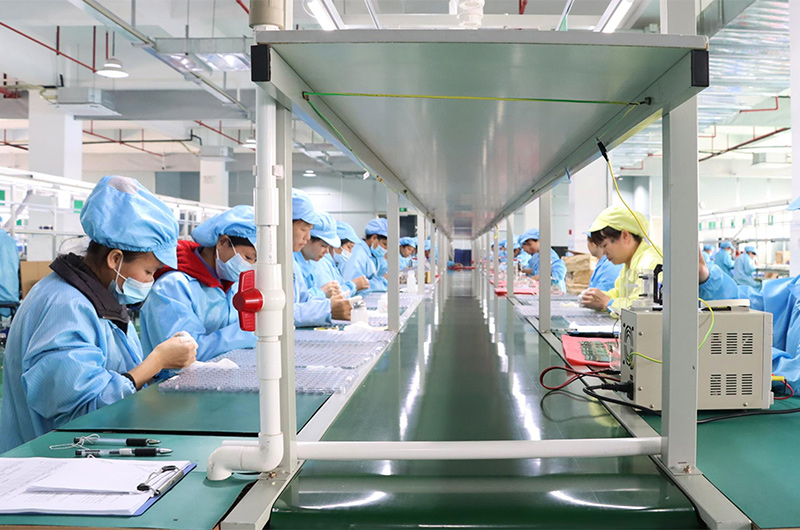
Product Assembly: The Art of Turning Ideas into Reality The products you use in your daily life all depend on product assembly—a combination of precision, engineering, and craftsmanship. Product assembly is far more than just putting parts together. It starts with careful design and planning, turning ideas into detailed blueprints. The assembly line brought efficiency and mass production to the world, while skilled workers still add the essential human touch for quality and detail. Today, automation and robotics work alongside people to achieve speed, accuracy, and consistency. Lean manufacturing reduces waste and improves efficiency, while strict quality control ensures every product meets high standards. Modern assembly also supports customization to fit individual needs. Product assembly shapes many key industries: Electronics: Compact, high-performance gadgets. Healthcare: Reliable medical devices. Furniture & consumer goods: Functional, well-made daily products. Pet: Safe, comfortable products for pets. With growing focus on sustainability, assembly processes now use eco-friendly materials and energy-efficient methods. Looking ahead, new technologies like AI and advanced automation will make assembly even more efficient, flexible, and sustainable. Product assembly is the vital bridge between imagination and real life—turning concepts into the innovations we depend on every day.
Get all the raw materials and performance characteristics of injection molded plastic product
28 , February

Get all the raw materials and performance characteristics of injection molded plastic products in one go!

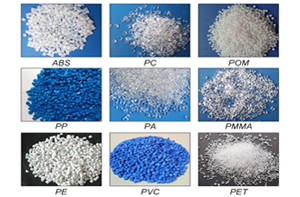
In modern manufacturing, plastic products are popular due to their lightweight, durable, and easy to process characteristics. As one of the main methods of plastic processing, injection molding often determines the quality and performance of its products based on the raw materials used. So, what are the raw materials for injection molded plastic products? What are their unique performance characteristics? Next, let’s unveil the mystery of plastic together! 一、Definition of Plastic Plastic is a material primarily composed of synthetic or natural polymer compounds. Under specific temperature and pressure conditions, it can be molded into various shapes and can maintain its shape unchanged at room temperature. 二、 Composition and classification of plastics The main component of plastics is resin, and according to different types of resins, plastics can be divided into the following categories: Thermoplastic: This type of plastic can become soft and flow when heated, and then harden and maintain its shape when cooled. Common thermoplastic materials include polyethylene (PE), polypropylene (PP), polystyrene (PS), polyvinyl chloride (PVC), etc. Thermosetting plastics: These types of plastics can soften and flow when heated, but when heated to a certain extent, they will begin to undergo chemical reactions, forming an insoluble and non melting network structure. Common thermosetting plastics include phenolic resin (PF), epoxy resin (EP), etc. Universal plastics: These types of plastics have a large production capacity, wide applications, and low prices, such as polyvinyl chloride, polystyrene, polyethylene, etc. Engineering plastics: have certain metallic properties, can withstand certain external forces, and have good mechanical, electrical, and dimensional stability. Common engineering plastics include polyamide (PA), polycarbonate (PC), polyoxymethylene (POM), etc. Functional plastics: plastics with special functions such as radiation resistance, superconductivity, magnetic conductivity, and photosensitivity. For example, fluoroplastics, organosilicon plastics, etc.

Products
Contacts
WhatsApp
Email