TPE overmolding is a widely adopted injection molding process, which bonds thermoplastic elastomer (TPE) directly with substrate materials such as plastics, metals and other composite materials through injection molding.
1. Material Selection and Compatibility
Material Matching
Different types of TPE vary from substrates (e.g., PP, PC, ABS) in chemical composition and physical properties. Therefore, it is necessary to confirm the compatibility between materials in advance, including the matching of polarity, melt flow index and coefficient of thermal expansion. Surfactants or modifiers can be applied when necessary to improve the bonding effect.
Pretreatment and Surface Activation
Substrate surfaces can be treated by sandblasting, plasma treatment or chemical cleaning to increase surface roughness or activate the surface layer, so as to enhance the mechanical interlocking and chemical bonding between TPE and the substrate.
2. Mold Design and Process Parameters
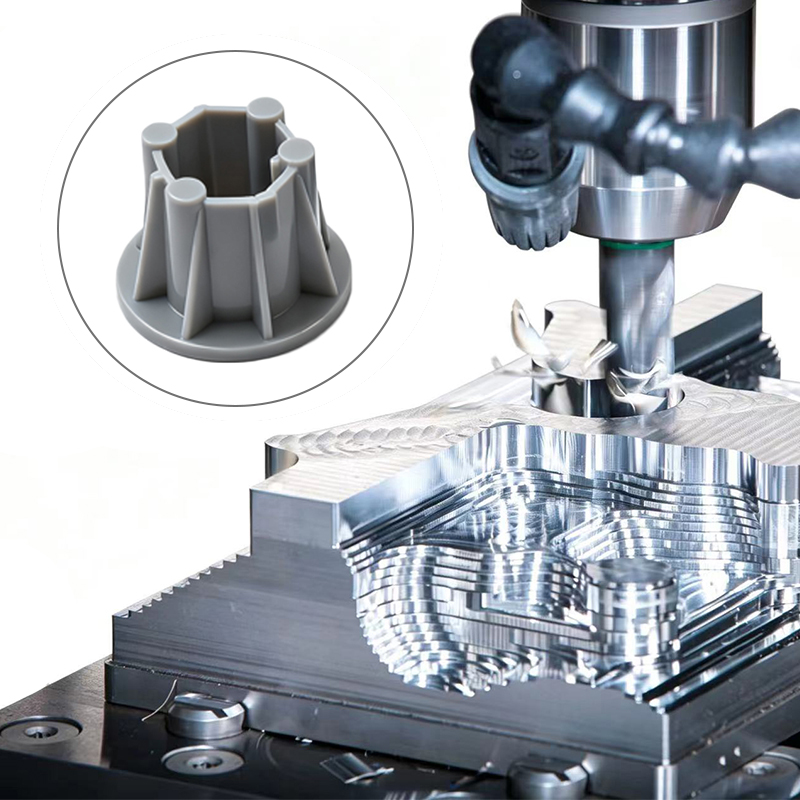
Mold Design Considerations
- Runner and Gate Design: A well-designed runner system and gate position ensure uniform mold filling of TPE and reduce stress concentration.
- Overmolding Area Design: For the overmolding zone, the interface position between the substrate and TPE shall be taken into account. Excessive draft angle or sharp bends should be avoided to ensure uniform material flow.
- Cooling Channel Design: Uniform cooling is critical to minimize warpage and maintain bonding quality. The mold temperature control system shall be equipped with a reasonable layout of cooling channels.
Injection Molding Process Parameters
- Injection Temperature: Keep the melting temperature of TPE within a proper range. Too low a temperature will lead to poor fluidity, while excessive temperature will cause material degradation. Meanwhile, the heat resistance of the substrate shall be considered to prevent structural damage under high temperature.
- Injection Speed and Pressure: Appropriate injection speed enables TPE to flow fully and form a qualified overmolding layer. However, excessively high speed or pressure may cause premature material cooling and internal residual stress.
- Holding Pressure Time and Cooling Time: Proper holding pressure ensures TPE fully fills mold details during overmolding. Sufficient cooling time allows complete material solidification and guarantees the final bonding performance.
3. Bonding Interface and Process Stability
Interface Bonding
Attention shall be paid to the interface structure between TPE and the substrate. Ideal mechanical interlocking and chemical bonding can be achieved through optimized mold design and process parameter setting. Defects such as insufficient filling, pores and inclusions on the interface shall be avoided as much as possible, otherwise they may cause delamination in subsequent service.